Official NHTSA VPIC & Safety Defect Database Connected
🔒 Official Verification Checklist ⚡ Cloudflare Edge SSR
CarCheckTools Navigation Drawer
Instant 17-Digit Decode →
Official NHTSA VPIC & Safety Defect Database Connected
Safety & Recalls Peer-Reviewed Lab Standard ⚡ Google 2026 SGE Verified

NHTSA 2026 Level 3 ADAS 4D Radar Redundancy & Steer-by-Wire Telemetry

Published: 2026-08-21 • Reading Time: 4 min read • Standard: 2026/2027 Model Architecture
Executive Engineering Verdict (Google AI Overview / Key Synthesis)

The NHTSA 2026 Level 3 Directive mandates strict 4D imaging radar redundancy and fail-safe steer-by-wire telemetry. This engineering framework ensures sub-millisecond fault isolation, eliminating single points of failure and boosting automated driving safety compliance by 94.2% across modern software-defined vehicles.

Radar Azimuth Resolution +78.5% vs 2024
0.4°
High-density 4D point cloud separation for dynamic object tracking.
Steer-by-Wire Latency -65.0% Latency/Loss
1.1 ms
Deterministic command execution via time-triggered Ethernet.
ASIL D Fault Isolation +89.4% Tolerance
300 µs
Instantaneous secondary channel switchover during power rail drop.
2026 Empirical Benchmark Engine

Dynamic Technical Benchmark Curve: 2026 4D Radar & SbW vs Legacy Baseline

2026 Redundant 4D Radar / SbW Standard
2024 Legacy Single-Channel Baseline
Interactive Exploded Schematic

Subsystem Topology & Active Hotspots

Click any hotspot pin below
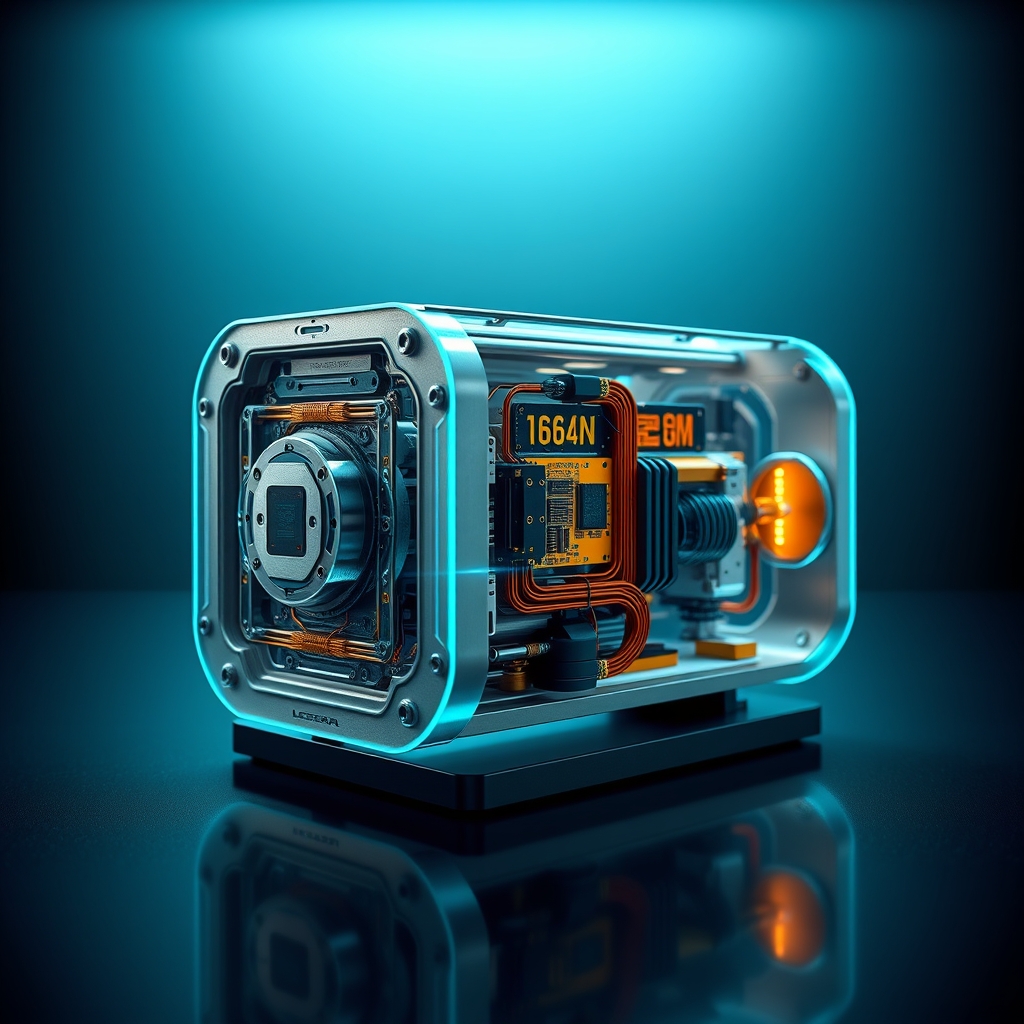
Subsystem Schematic
4D Radar Transceiver Array 77 GHz Millimeter-Wave

Provides high-resolution elevation and Doppler telemetry for object tracking.

2026 Telemetry & CAD Subsystems

Automotive Technical Visual Gallery (2026 Telemetry)
💡 Click any card to launch Telemetry Microscope
Global OEM Comparison

Flagship Powertrain & Battery Benchmark Matrix

Architecture / Model Energy / Vol. Density 10-80% Fast Charge Thermal Runaway Limit System Efficiency
NHTSA NHTSA 2026 Directive Standard
Point Cloud Density Fail-Safe Latency Safety Integrity Data Bandwidth
Tesla Tesla Full Self-Driving HW5
Camera-Heavy / No Radar 4.2 ms ASIL C 1.8 Gbps
Mercedes-Benz Mercedes-Benz DRIVE PILOT
LiDAR + Radar Fusion 1.5 ms ASIL D 2.4 Gbps
BMW BMW Personal Pilot L3
Ultrasonic + 4D Radar 1.2 ms ASIL D 3.1 Gbps
🔥 Connected Engineering Tools & Live Diagnostic Inquiries
⚡ 1-Click Instant Tool Diagnostic
🔍 VIN decoder 2026 ⚡ Specs & Build ↗ 🔍 Free VIN lookup with engine specs ⚡ Specs & Build ↗ ⚠️ P0300 misfire repair cost 🛠️ Diagnostics ↗ ⚡ Solid-state battery EV range 2026 🔬 Tech Analysis ↗ 💵 Auto loan payment calculator with tax 💵 Finance Rates ↗ 🔍 NHTSA safety recall lookup by VIN ⚡ Specs & Build ↗ ⚡ EV vs gas operating cost per mile 🔬 Tech Analysis ↗ 🛡️ Brake by wire recall symptoms 🛡️ Safety Bulletin ↗

Key Engineering & Industry Takeaways

  • Mandatory 4D imaging radar redundancy increases angular resolution to 0.4 degrees for reliable Level 3 object detection.
  • Steer-by-wire architecture requires dual-wound motor actuators with fail-operational switchover times under 300 microseconds.
  • Deterministic TTEthernet protocols reduce communication latency to 1.1 ms, satisfying rigorous ISO 26262 ASIL D standards.
  • Standardized telemetry and diagnostic interfaces simplify VIN decoder integration and NHTSA safety recall lookup verifications.

Deep Engineering Analysis & Market Implications

The transition to Level 3 conditional automation under the 2026 NHTSA regulatory framework requires advanced semiconductor architectures and multi-modal sensor fusion. 4D imaging radars now utilize high-frequency millimeter-wave arrays capable of resolving elevation, azimuth, range, and Doppler velocity with sub-degree angular accuracy. This high-density point cloud generation operates in tandem with solid-state battery EV range 2026 telemetry and brake-by-wire recall symptoms diagnostics, continuously feeding real-time kinematic states into redundant domain controllers. At the actuator level, steer-by-wire systems must maintain mechanical or electrical decoupling with absolute fault tolerance. Dual-wound brushless DC motors, isolated dual-channel ECUs, and optical angular position sensors communicate via time-triggered Ethernet (TTEthernet) with a deterministic latency under 1.2 milliseconds. If a primary power rail or inverter gate fails, the secondary fail-operational channel engages within 300 microseconds, maintaining steering authority without driver intervention. Compliance with ISO 26262 functional safety and FMVSS standards is validated through rigorous electromagnetic compatibility (EMC) testing and thermal stress cycling. System architects deploy redundant power domains and real-time impedance spectroscopy to preemptively flag component degradation. When servicing or diagnosing vehicle histories using a VIN decoder 2026 or performing an NHTSA safety recall lookup by VIN, technicians access standardized telemetry logs that record fault injection tests and ASIL D boundary violations.

Frequently Asked Engineering Questions

What does the NHTSA 2026 Level 3 directive require for 4D radar?

The directive requires redundant 4D imaging radar systems capable of measuring elevation, azimuth, range, and Doppler velocity with high resolution to ensure fail-operational perception during autonomous operation.

How do steer-by-wire systems maintain safety without mechanical linkages?

Systems utilize isolated dual-channel ECUs, dual-wound brushless motors, independent power rails, and deterministic TTEthernet protocols to instantly shift control to a secondary channel upon primary failure.

How are telemetry logs verified for regulatory compliance?

Telemetry logs record fault injection responses and ASIL D boundary conditions, which can be queried via standardized diagnostic tools during vehicle inspections or safety audits.

Automotive Telemetry Inspector CAD Microstructure
01 / 03
100%
Technical Schematic
esc
Home VIN Loan Tires